
What Is Certified Product Destruction? A Guide for Brand Owners

Every brand eventually ends up with product it can’t sell. A recall pulls a lot off shelves. A shipment arrives damaged. Seasonal packaging goes out of date. Customs seizes counterfeits bearing your logo. However it happens, that inventory still carries your name. If it ends up on a discount website, a flea market table or a landfill photo on social media, the damage to your brand can far outweigh the value of the goods.
That’s why more brand owners use certified product destruction. It’s a documented, verifiable process that guarantees unwanted products are destroyed, and that gives you the paperwork to prove it. This guide explains what certified product destruction is, when you need it, how the process works, and how to choose the right partner.
What is certified product destruction?
Certified product destruction is the secure, documented destruction of goods so they can never be resold, reused or recovered in their original form. It ends with a certificate of destruction, a signed record that confirms what was destroyed, when, where and how.
Three things separate it from simply throwing products away:
- Security: goods are tracked and protected from pickup to final destruction, so nothing goes missing along the way.
- Verification: destruction is witnessed, recorded on video, or both, so you have proof rather than a promise.
- Documentation: you get a certificate and supporting records you can show auditors, regulators, insurers and your finance team.
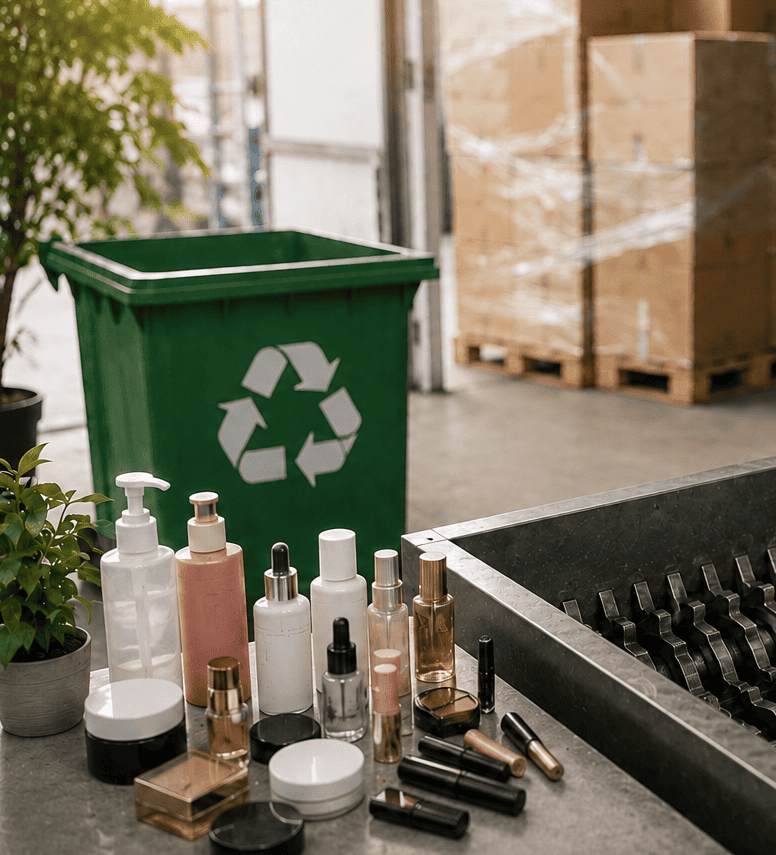
Where possible, the destroyed materials are then recycled. Cardboard, plastics, metals and glass are separated and sent back into the supply chain, which means protecting your brand doesn’t have to mean sending everything to landfill.
When do brands need certified product destruction?
Any product that can’t be sold but still carries your brand is a risk. These are the most common reasons companies turn to a certified destruction partner:
- Product recalls. When a recall is issued, you need proof that affected product was taken out of circulation. Regulators such as the FDA, the CPSC or the USDA may expect records showing how recalled goods were handled.
- Expired or out-of-date goods. Food, beverages, supplements, cosmetics and over-the-counter products past their date can’t legally or safely be sold, but they still look like your product.
- Damaged or off-spec inventory. Crushed cases, mislabeled lots, packaging errors and quality failures often can’t be reworked economically.
- Counterfeit and seized goods. Fakes recovered by customs or through brand enforcement need to be destroyed so they don’t re-enter the market.
- Obsolete packaging and promotional items. Old branding, discontinued SKUs and expired promotions can confuse customers or undercut current pricing if they leak out.
- Overstock and returns. Some brands choose destruction over liquidation to protect pricing and keep their products out of unauthorized channels.
- Regulated products. Alcohol, tobacco and pharmaceuticals each carry their own rules on how product is destroyed and documented, including tax rules from agencies such as the TTB.
How the certified destruction process works
A well-run destruction program follows the same core steps, whether you’re destroying one pallet or a hundred truckloads.
- Scoping and quote. You share what needs to be destroyed: product type, quantity, packaging, location and any regulatory requirements. Your partner recommends a destruction method and confirms what documentation you’ll need.
- Secure pickup or drop-off. Product moves under chain-of-custody control, typically in sealed trailers or locked containers with documented seal numbers, by vetted drivers.
- Receiving and inventory verification. On arrival, the load is weighed and counted against your manifest, and any discrepancies are flagged before destruction begins.
- Destruction. Products are made permanently unusable, by shredding, crushing, grinding, depackaging or another method suited to the material. Liquids are separated and handled according to environmental rules.
- Witnessing and verification. You can attend in person, watch live, or receive photo and video records of your product being destroyed.
- Recycling and responsible disposal. Packaging and materials are separated for recycling wherever possible. Anything that can’t be recycled goes to an appropriate disposal or energy-recovery facility.
- Certificate of destruction. You receive a certificate and supporting records, often within days of destruction, for your files and auditors.
What a certificate of destruction should include
A certificate is only as useful as the detail on it. A strong certificate of destruction includes:
- Your company name and the destruction provider’s name, address and certifications
- A unique certificate or job number
- A description of the products destroyed: SKUs, lot numbers, brand and product type
- Quantity, by case and unit count and by weight
- Pickup date and destruction date
- The destruction method used, and where it took place
- Chain-of-custody details: trailer and seal numbers, and receiving weights
- Witness names, or a reference to photo and video evidence
- Where the materials went afterward (recycled, energy recovery or disposal)
- The signature of an authorized representative
If you plan to claim a tax write-off, an insurance recovery or an excise tax refund on destroyed goods, confirm with your accountant what the certificate must show. Some agencies require specific details or advance notice before destruction.
How to choose a product destruction partner
Not every recycler or hauler is set up for secure destruction. Ask these questions before you sign:
- Are you certified? Look for independent certifications such as NAID AAA, which involves unannounced audits of security, employee screening and destruction processes.
- How do you control chain of custody? Ask about sealed trailers, GPS tracking, camera coverage and who can access the product before it’s destroyed.
- Can I witness the destruction? Good partners offer in-person, live-video or recorded witnessing.
- What happens to the materials afterward? Ask how much is recycled, and where everything else goes.
- Can you handle my product type? Liquids, aerosols, alcohol, pharmaceuticals and electronics each need specific handling and permits.
- Do you have the capacity and locations I need? If you have multiple sites, a partner with multiple plants and its own trucking can simplify logistics and give you one standard process.
- What’s on your certificate? Ask for a sample before you commit.
Frequently asked questions
How much does certified product destruction cost? Pricing depends on product type, volume, packaging, location and how much material can be recycled. Some recyclable materials, such as cardboard, can offset part of the cost. Most providers quote per load, per pound or per pallet.
How long does it take? Many jobs can be scheduled within days. Certificates are typically issued shortly after destruction is complete.
Can destroyed products be recycled? Yes. Packaging and many product materials, including cardboard, plastics, metals and glass, can be separated and recycled once the product itself has been made unusable.
Is a certificate of destruction legally required? It depends on the product and situation. Even when it isn’t required, a certificate gives you proof for audits, recalls, insurance claims and tax purposes.
What’s the difference between product destruction and document shredding? Document shredding protects information. Product destruction protects your brand, your customers and your compliance standing by making sure physical goods can never be resold or misused.
Protect your brand with Green Planet 21
Green Planet 21 provides NAID AAA certified secure product destruction from plants in California, Nevada and Washington. We offer chain-of-custody transport, witnessed destruction, recycling of recovered materials, and detailed certificates of destruction. Whether you’re managing a recall, clearing expired inventory or destroying counterfeits, we’ll help you close the loop securely and responsibly.